

Recovering from Disaster
After living through displacement or loss from a
natural disaster...
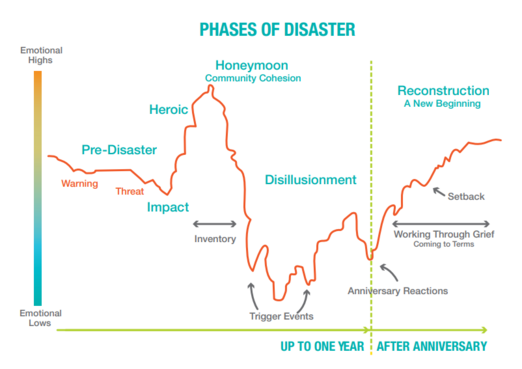
The Phases of Disaster illustrates the emotional highs
and lows that can be expected for up to one year
after the disaster occurred
What's important to note is that the recovery process
is not linear. It involves a great deal of energy,
personal resilience, and trust in the process.
This theory developed and gained traction in the mid-1990s to describe the positive psychological changes people can experience as a result of struggling with highly challenging life circumstances or traumatic events. Post-traumatic growth contrasts with the traditional focus on the negative effects of trauma by instead highlighting areas where individuals can and have grown or found new meaning after experiencing a trauma.
There are five areas or domains of 'Post-Traumatic Growth' identified through their research:
1. Appreciation for Life
Increased gratitude, altruism, clear sense of priorities, appreciation for what’s good in life
2. Spiritual Growth
Deeper developed and meaningful beliefs and philosophies of life, deeper level of awareness, deeper faith, clearer purpose
3. Improved Relationships
Increased sense of belonging, increased emotional vulnerability, loving, empathetic, supportive, stronger bonds
4. New Possibilities
New interests, new perspectives, adaptability, openness to new ways of living and working
5. Increased Personal Strength
Increased resilience, self-reliance, confidence, humility, deepened meaningful narrative, more authentic self
There is evidence to suggest that individuals and communities experience an increase in personal adaptability following loss and/or displacement following a natural disaster.
Climate Psychology is a field of study that explores how people think, feel, and behave in relation to climate change and environmental crises. The research examines the emotional and psychological responses individuals and communities have (such as anxiety, denial, grief, guilt, and hope) and how these reactions influence their ability to take action.
When climate disasters happen, we are faced with the reality that major changes need to happen now to reduce future harm, restore damaged ecosystems, and adapt to changes (Climate Psychology Alliance, 2025). The daunting scale of transformation needed means that we begin to face fundamental questions about our values and how we live, including our emotional, psychological and interpersonal adaptative abilities (Bendell, 2021).

Stress Management
(1) Design a comprehensive self-care routine that works best for you, but includes at minimum
- Taking required medications
- Staying hydrated and eating regular meals
- Minimizing substance use and avoiding substance dependence
- Prioritizing sleep and personal hygiene for comfort
- Time to engage deeply in a hobby or preferred activity (writing, painting, walking, crochet, reading, movies, etc.)
(2) Begin working through your practical recovery-related tasks
Contacting insurance, photographing damages, documenting and storing expenses, and so on.
(3) Avoid prolonged social isolation, connect with your trusted companions or a mental health professional
Request counselling sessions here.
(4) Explore some self-help options for trauma and post-traumatic stress.
Incandescence (2024), directed by Nova Ami and Velcrow Ripper and produced by the National Film Board of Canada, is a visually stunning feature-length documentary that reframes how we perceive wildfires. Through immersive on-the-ground footage and intimate stories from Indigenous Elders, first responders, and local residents, the film reveals the destructive power of mega-fires—but also their essential role in ecological renewal.
Blending environmental urgency with a message of hope, Incandescence explores traditional Indigenous fire stewardship practices like controlled burns, illustrating how working with nature’s cycles can transform fire into a force for regeneration and resilience.

Counselling Options
Need someone to talk to? Call 1-866-FARMS-01 or 1-866-327-6701 to speak to a crisis counsellor 24/7
Providing Mental Health First Aid (MHFA) isn’t about fixing everything in the moment, or being someone's therapist. Being a supportive presence is what makes all the difference.
Mental Health First Aid Guidelines
Using the A.L.G.E.S. Method
